The first time I ate alone at a restaurant on purpose, I was twenty three, sitting in a small tasca in Porto, and I spent the entire meal pretending to type a very important email on my phone. I want to tell you how to eat alone at a restaurant without feeling like everyone is staring, because the truth is no one is staring, and the freedom on the other side of that fear is one of the quietest joys I have found in adult life. This guide walks through how to pick the right restaurant, what to do with your hands, what to bring (and what to leave behind), and how to actually enjoy the meal instead of surviving it. The shortest version: choose a counter or bar seat, order something slow, bring one prop instead of three, and let the meal take as long as it takes.
Key Takeaways
- Counter and bar seats are the easiest entry point, because the bartender or chef becomes a soft form of company.
- Bring one prop (a book, a notebook, a folded newspaper), not three, so the meal stays the main event.
- Sunday lunch and weekday early dinner are the lowest pressure windows for a first attempt.
- A slow paced cuisine (Italian small plates, Lebanese mezze, Japanese kaiseki) gives you more permission to linger.
- The discomfort fades in about ten minutes, every single time.
The Porto Restaurant Where I First Tried
The tasca was in Cedofeita, four tables, a small chalkboard menu, and an owner who was also the cook, the host, and the dishwasher. I had been walking around the city for nine hours and my feet hurt and I was hungry in that lightheaded way you only get when you have skipped lunch in a country where lunch is a religion. I walked in, asked for a table for one, and waited for the look. The look I had built up in my head, the pity look, the "oh you poor thing" look. It did not come. The owner pointed at a small table near the window and asked if I wanted bread.
I had spent six months avoiding solo restaurants because of a look that no one ever gave me.
I ordered the bacalhau à brás. I pulled out my phone the second I sat down, opened my email, and started scrolling for nothing. I scrolled through the bread course, the wait, the first three bites of cod, and then somewhere around the fourth bite I caught myself doing it and put the phone face down. I looked up. The owner was laughing with two regulars at the bar. A woman at the next table was reading a paperback with her legs crossed and a small glass of wine in her hand. Nobody was looking at me. Nobody had ever been looking at me. At the end of the meal the owner brought me a free tawny port and asked where I was from.
Why Eating Alone Feels Harder Than It Should
Psychologists have a name for the thing I was doing in Porto. They call it the spotlight effect, the cognitive bias that makes you believe other people are paying far more attention to you than they actually are. Studies out of Cornell going back to the 1990s found that participants consistently overestimated how much strangers noticed them, sometimes by close to fifty percent. The brain has a hard time accepting that most people, most of the time, are thinking about their own dinner, their own work week, their own life.
There is also a cultural piece. In a lot of Western dining culture, a "table for one" still carries a faint social script that codes solo dining as failure or loneliness. It is not, of course. Solo diners in Tokyo, Madrid, Lisbon, and increasingly in cities like Copenhagen and New York are a normal and welcome part of the restaurant economy. Reservation platforms like OpenTable have started featuring solo dining categories. Several Tokyo izakayas and Madrid wine bars are actually designed for one. But the script lingers in our heads, and the phone becomes armor. We pull it out to signal that we are busy, that we have people, that someone is texting us back.
The phone is not the problem. What the phone is hiding from is the problem.
The Counter Seat Hack: Where to Sit When You Eat Alone
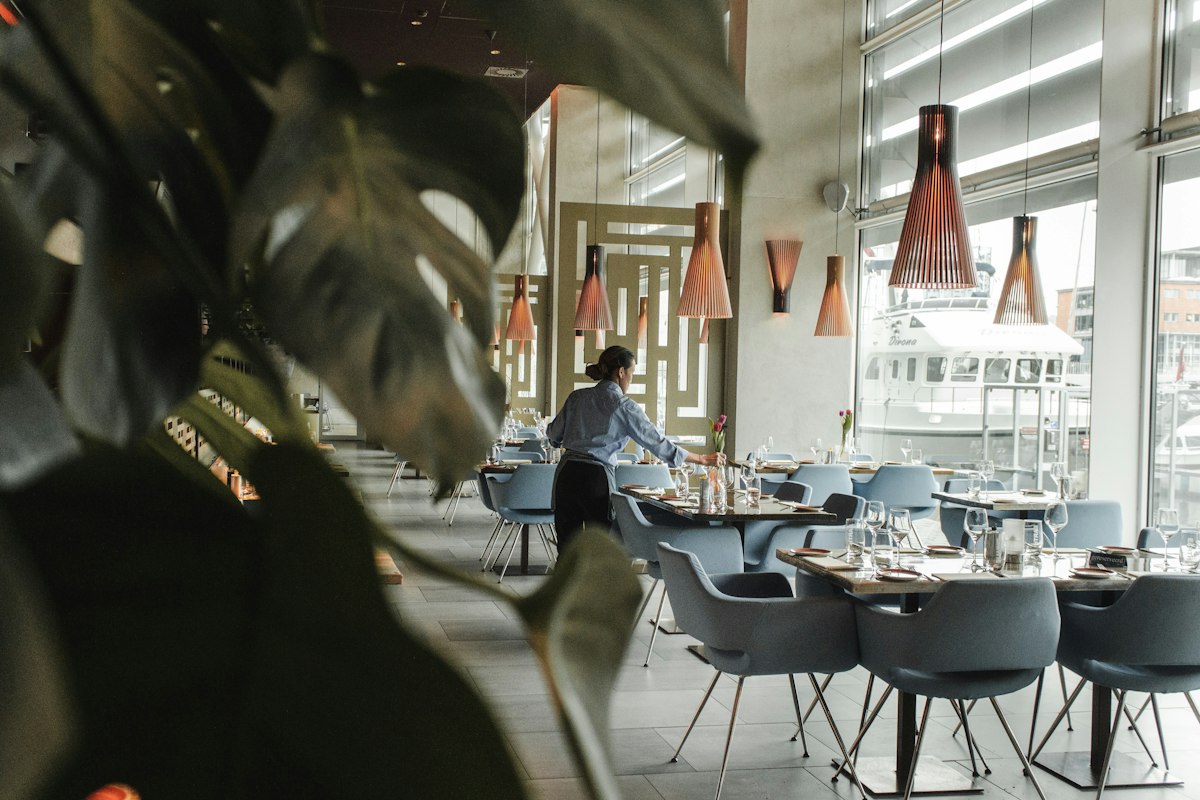
If you are eating alone for the first time, sit at a counter. Not a four top in the middle of the dining room, not a window two top angled toward the street. The counter. The bar. The kitchen pass. A counter seat does three things at once. It gives you something to look at (the bartender pouring, the chef plating). It gives you the option of low stakes conversation if you want it. And it removes the visual asymmetry of a single person at a table built for two.
The omakase counter at a sushi restaurant is the gold standard for solo dining. So is the chef's counter at a small Italian place, the ramen bar at almost any noodle shop, and the standing bar at a wine bar in Madrid or Barcelona. These rooms are built for one. You are not the exception in those rooms. You are the audience the room was designed for.
If a restaurant has no counter, look for a small two top against a wall with a view of the dining room. You want a vantage point, not a stage. The middle of the room is the stage. Avoid the stage for the first few months.
What to Order (And What to Skip)
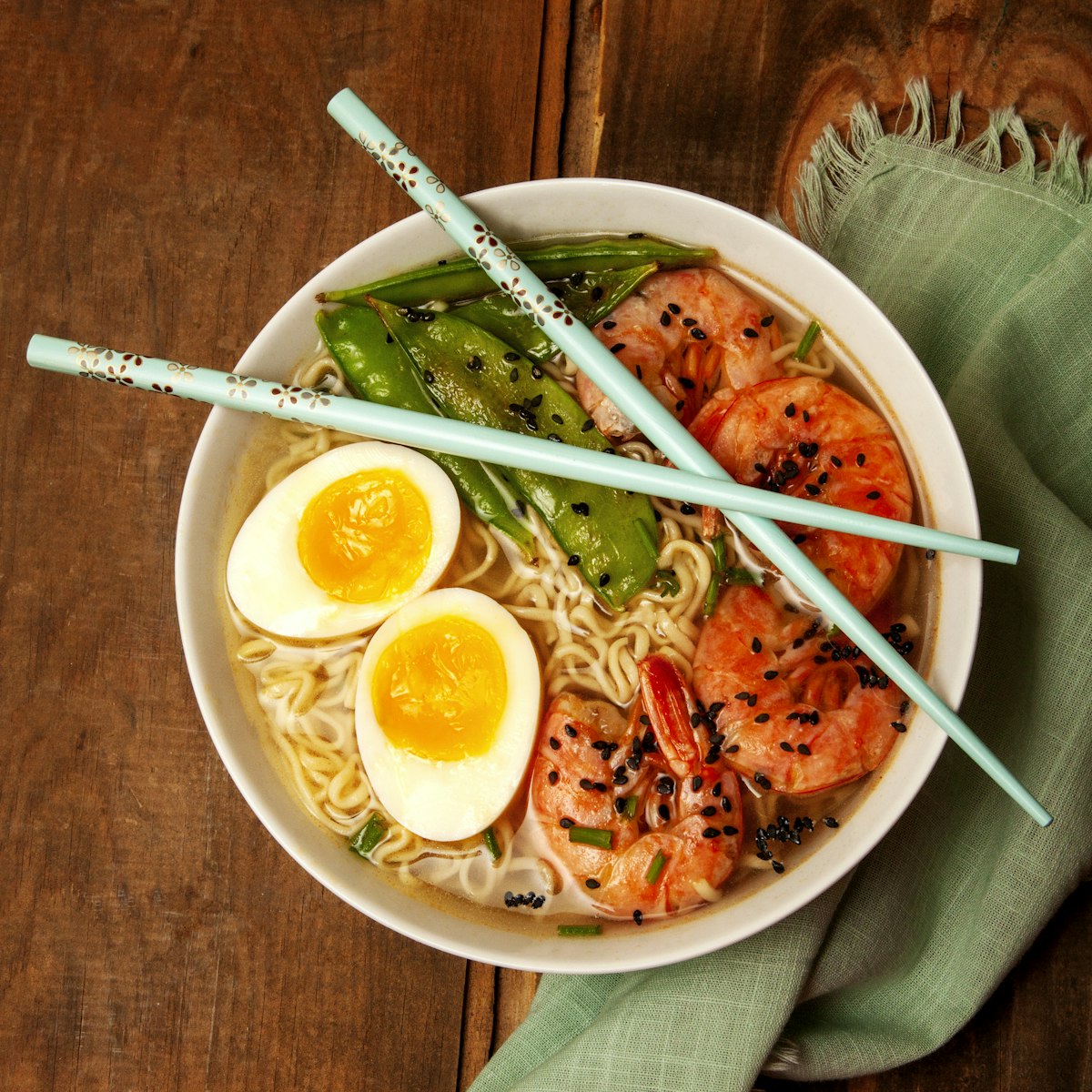
Order something that takes time. This is the single most useful tip I have given anyone learning to eat alone, and I have given it many times. A multi course meal, a tasting menu, an antipasti and primi and secondi sequence, a Lebanese mezze spread. The pacing is the point. When the meal is slow, you have natural beats between courses to think, to look around, to read a paragraph, to sip your drink. When the meal is fast, you have eight minutes between sitting down and an empty plate, and that is when the panic of "what do I do now" kicks in.
Skip the quick lunch reflex. Skip the salad bowl and the sandwich shop on your first few solo attempts. They are designed for fast turnover, and you will eat too fast, leave too fast, and walk out feeling like you survived something instead of enjoyed it.
Wine pairings, if you drink, are a beautiful crutch. So are mocktail pairings if you do not. The pairing structure gives the meal an arc, a beginning and middle and end. It also gives you something to talk to the sommelier about, if you want. If you are travelling, this is also how you taste a region. A wine pairing at a Lisbon tasca will teach you Portuguese grapes in two hours. A sake flight at a Tokyo izakaya will do the same for sake.
A meal eaten in eight minutes is not a meal. It is fuel.
What to Bring (And What to Leave at Home)
Bring one prop, not three. The mistake I made for two years was treating solo dinners like a productivity session. Phone, Kindle, notebook, headphones, a stack of articles I had saved to read. I would arrive at the restaurant with a small luggage of distraction, and I would spend the meal hopping between objects, none of them actually holding my attention.
One prop is the rule. Pick the one. A physical book is my favorite, because it is less screenlike than a Kindle and easier to set down at the right moment. A notebook is the second best, because the act of writing is slow and easy to interrupt. A folded newspaper or a magazine works too. The point of the prop is not to use the prop for the whole meal. The point is to have a soft place to land when you need one, for the thirty seconds you need it.
The phone goes in your bag. Not face down on the table, not in your pocket. In your bag. The act of having to physically reach for it is friction, and friction is what stops the scroll reflex. If you struggle with this, set your phone to airplane mode before you walk into the restaurant. It is a small physical action that creates a real psychological boundary.
The First Ten Minutes Are the Hardest
The hardest part of eating alone is the first ten minutes. You sit down, you order, and then there is a stretch of empty time where the food has not come and the wine has just been poured and your hands feel like they belong to someone else. This is the moment most people pick up their phone and never put it down again for the rest of the meal.
The trick is to know that this stretch passes. Set yourself a small rule: no phone for the first ten minutes. Look around. Read the menu again. Notice the music. Watch the bartender. Read the first chapter of your book if you brought one. By minute eleven, the food has started arriving and the meal has its own momentum, and the desire to scroll evaporates.
I have eaten alone enough times now that the first ten minutes is my favorite part. The room settles around you. The light shifts. The first sip of wine hits the front of your tongue and you have the whole rest of the meal ahead of you and no one to perform for. It is the same feeling I have written about in the piece on building a slow morning routine that actually sticks. The same muscle, applied to a different room.
What Happened at My Sixth Solo Dinner
The sixth solo dinner I ever had was at a tiny izakaya in Shimokitazawa, in Tokyo. I sat at a six seat counter and ordered three things from the chalkboard, in my very bad Japanese, and the chef pretended to understand me. About twenty minutes in, an older man two seats down asked me, in English, if I was a student. I said no, I was a software engineer on vacation. He laughed and said his daughter was also a software engineer, in Yokohama, and we talked about her job for the next forty minutes while we both ate.
The point of the story is not that solo dining will deliver you a magical conversation every time. Most of the time it will deliver you exactly what it promises: a meal, by yourself, in a public room. But sometimes, often enough that I have stopped being surprised, eating alone in a public place is how you accidentally meet your most interesting strangers. You become available in a way that a group of two or four never is. Couples are closed systems. A table of friends is a closed system. A solo diner at the counter is open. This is also why so many of the kindest interactions I had during my five days of solo travel in Kyoto happened at counters. It is the same principle.
The price of admission to those conversations is being alone, in public, with your phone in your bag.
Why I Keep Doing It
Solo restaurant meals are not a substitute for company. I love eating with people. I love a long dinner with friends, the kind that ends with three coffees and an argument about a movie nobody else cared about. But the solo meal is its own thing. It is rest. It is a checkpoint with yourself in a week that probably did not have many. It is the most reliable way I have found to slow down without making slowness a project.
There is also a confidence thing that happens after about ten solo meals. You stop apologizing internally for taking up a table. You start ordering exactly what you want without smoothing it down for a companion. You learn what your actual food tastes are, not your social food tastes. Cultural writers have noted that solo dining has shifted from social anomaly to one of the fastest growing categories in the restaurant world, and once you start doing it regularly, you understand why.
FAQ
Is it weird to eat alone at a fancy restaurant?
No. Fine dining rooms are some of the most solo diner friendly rooms in the world, because the pacing is built for slow meals and the staff is trained to treat every diner as the main character. If anything, an omakase counter or a tasting menu room will make you feel more welcome than a casual bistro will.
What do you do when you are waiting for the food?
You look around. You read a paragraph of your book. You drink your wine. You watch the room. The waiting is the meal too. The food is just the part with the plate in front of you.
Should I tell the host I am dining alone before I arrive?
If the restaurant is small or popular, yes. A quick note when you book ("table for one, happy to sit at the counter") helps the staff seat you well. For walk in spots, just ask for the counter when you arrive.
How do I deal with feeling self conscious?
Wait ten minutes. The feeling almost always fades. If it does not, order a glass of wine, look around the room, and notice how many other people are looking at their own plates. Almost everyone is.
What if someone tries to talk to me and I want to be left alone?
A polite smile and a return to your book is enough almost every time. You do not owe anyone a conversation just because you are sitting at a counter.
What is the best city for solo dining?
Tokyo, hands down. Tokyo's restaurant economy is built around solo diners. Counter ramen shops, conveyor sushi, kissaten cafes, izakaya bars. Madrid is a close second because of the standing bar culture. Lisbon, Copenhagen, and Singapore round out the easy starter cities.
Try It This Week
Pick one restaurant. Pick a Sunday lunch or a Tuesday early dinner. Sit at the counter. Bring a book. Leave your phone in your bag. The discomfort lasts ten minutes. The rest is yours.
If you liked this, you might also like the piece on slow morning routines, or the Kyoto solo travel guide. Both are about the same thing in different rooms.